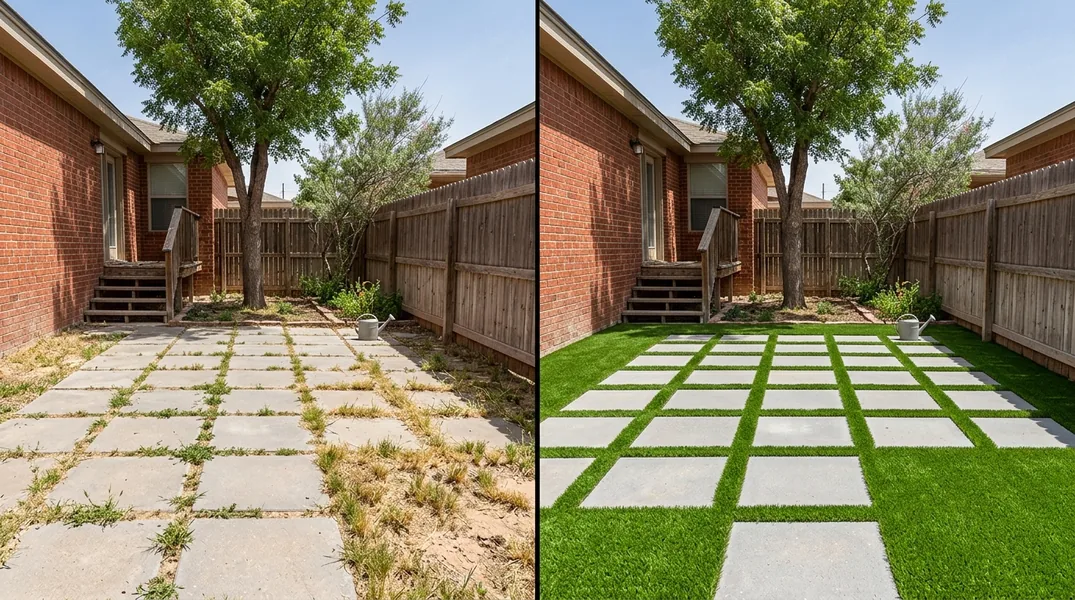
Understanding Common Artificial Turf Damage in Midland
Artificial grass has transformed outdoor living for homeowners across Midland, offering a low-maintenance alternative to natural lawns. However, even the highest-quality synthetic turf can develop issues over time. Whether you've noticed lifted edges along your lawn's perimeter, visible seams running across your yard, or mysterious melted spots, you're not alone. These are among the most common problems homeowners encounter with artificial grass installations.
The good news is that most of these issues are repairable, and many are preventable with proper installation and maintenance. Understanding what causes these problems is the first step toward protecting your investment. At Midland Turf Installation, we've seen it all, and we're here to help you understand what's happening with your turf and how to fix it. Whether you installed your lawn years ago or recently completed Residential Artificial Grass Installation, knowing these common issues can save you time and money.
What Causes Lifted Edges and How to Fix Them
Lifted edges are one of the most frustrating problems homeowners face with artificial grass. This happens when the perimeter of your lawn begins to curl upward, creating an uneven surface that's both unsightly and potentially hazardous. The primary culprit is usually inadequate fastening during the initial installation. If the edges weren't properly secured with enough nails, staples, or adhesive, they'll gradually work their way loose, especially in high-traffic areas or during temperature fluctuations.
Environmental factors in Midland can accelerate edge lifting. Our intense heat and occasional wind gusts put stress on the perimeter of your installation. Additionally, if water isn't draining properly beneath the turf, hydrostatic pressure can push edges upward from underneath. The soil beneath your lawn may also settle unevenly over time, creating gaps that allow edges to lift. Repairing lifted edges typically involves re-securing the perimeter with professional-grade fasteners and ensuring proper drainage underneath. In some cases, the affected section may need to be re-stretched to restore a smooth, safe surface.
Seam Issues: Why Your Artificial Turf Seams Are Separating
Visible or separating seams are another common complaint we hear from homeowners. Seams are the joints where two pieces of artificial turf are joined together, and they're critical to the appearance and integrity of your lawn. When seams begin to separate, gap, or become overly visible, it's usually due to one of several factors. Poor seam adhesion during installation is the most common cause. If the seaming tape or adhesive wasn't applied correctly, or if the turf was installed during unfavorable weather conditions, the bond between sections can fail over time.
Temperature fluctuations can also cause seam separation. Artificial grass expands and contracts with heat and cold, and if your lawn wasn't installed with adequate allowance for this movement, seams will eventually separate. Heavy foot traffic directly over seams, particularly in areas like Midland where outdoor living is popular, can also accelerate seam failure. Professional turf repair involves re-seaming the affected area with high-quality adhesive and seaming tape, ensuring proper tension and alignment. In some cases, a small section may need to be replaced entirely if the damage is extensive.
Melted Artificial Grass and Window Reflection Turf Damage
One of the most surprising issues homeowners encounter is melted artificial grass. This occurs when the synthetic fibers actually melt or fuse together, creating a damaged, unusable section of lawn. The most common cause is concentrated heat, particularly from window reflections. Large windows or glass doors can act like magnifying glasses, focusing sunlight into an intense beam that directly hits your artificial turf. This concentrated heat can reach temperatures far exceeding what the turf fibers can withstand, causing them to melt or scorch.
Window reflection turf damage is particularly common in homes with large south-facing windows or sliding glass doors. The damage typically appears as a distinct melted or darkened patch that corresponds to the window's reflection pattern. Other heat sources can also cause melting, including heat from outdoor grills placed too close to the turf, reflected heat from metal structures, or even intense sunlight concentrated through certain types of outdoor lighting fixtures. Unfortunately, melted sections cannot be repaired. The affected area must be cut out and replaced with new turf. This is why we recommend positioning outdoor furniture, grills, and other heat sources away from your artificial lawn and considering window treatments if your home is prone to creating reflective heat patterns.
Artificial Turf Repair Near Me: When to Call a Professional
If you're searching for artificial turf repair near me, it's important to know when a DIY approach might work and when you need professional help. Minor issues like small debris stuck in the fibers or minor staining can often be addressed at home with gentle cleaning. However, structural problems like lifted edges, separated seams, and melted spots require professional expertise. Attempting to repair these issues yourself can actually make them worse, leading to more expensive repairs down the road.
Professional repair technicians have the right tools, materials, and experience to properly assess damage and implement lasting solutions. They understand the specific challenges of artificial turf installation in our region and know how to work with different turf types and backing materials. If you've noticed any signs of damage to your lawn, we recommend getting a professional evaluation. Midland Turf Installation offers comprehensive turf repair services for homeowners throughout the area. Contact us at (432) 289-5360 or request a free estimate to discuss your specific concerns. Early intervention often prevents minor issues from becoming major problems.
Preventing Future Damage: Maintenance and Best Practices
The best approach to artificial turf problems is prevention. Proper installation is foundational, which is why choosing an experienced installer matters significantly. Quality Residential Artificial Grass Installation includes adequate edge fastening, proper seaming techniques, and correct drainage installation. Beyond installation, regular maintenance goes a long way toward preventing issues. This includes brushing your lawn occasionally to keep fibers upright, removing debris promptly, and rinsing the surface periodically to maintain its appearance and functionality.
Be proactive about environmental factors that could damage your lawn. Position grills, fire pits, and other heat sources away from your turf. If you have large windows that create reflection patterns, consider installing window treatments or repositioning outdoor furniture to minimize reflected heat exposure. Ensure that water drains properly from your lawn and that no low spots develop where water can pool. If you have pets, regular cleanup and occasional rinses will prevent buildup of organic material. By taking these preventive steps and addressing small issues promptly, you can extend the life of your artificial grass installation significantly. If you're unsure about your lawn's condition or need professional advice on maintenance and prevention, Midland Turf Installation is here to help.
Looking for a professional artificial grass installation company in Midland? Midland Turf Installation responds fast for all your artificial grass installation needs.
Get a Free Quote